An orphan inherited only a pitiful letter… But when she read it, the laughter of her husband and his mistress turned into PANIC!
An orphan inherited only a pitiful letter… But when she read it, the laughter of her husband and his mistress turned into PANIC!

Orphan Maria sat in the cold, grave-like room of the notary, hunched under the weight of hostile, malicious glances. On either side of her—like wolves at the edges of a pen—sat Grigory, her husband, and his mistress, Lidia. He wore a smug grin, as if he had already won; she gave a venomous chuckle, as if savoring the thought of tearing her prey apart. The air in the room was thick, like syrup, saturated with hidden hatred and envy. The notary—a dry, parchment-like old man with a face carved from marble—was reading aloud the will of Aunt Anna, the only woman who had ever looked at Maria with love and care.
«…and all the property, including the house, land, and savings, passes to Grigory Ivanovich,» he pronounced, seemingly unaware of how Lidia barely suppressed a triumphant snicker. Her eyes burned like embers, and her lips, painted bright red, stretched into a smirk. Maria felt something inside her break.
Grigory, unable to hold back, laughed loudly, his laughter echoing off the walls as if mocking fate itself. Lidia echoed him, her voice sharp as a knife. Maria sat, clenching her fists, unable to lift her eyes. Was all that was left of her life—a letter? After so many years of humiliation, deprivation, and loneliness, she was given not a piece of bread, not a roof over her head, but just a scrap of paper? It was not a gift, but a spit in her face from destiny.
The envelope the notary handed her felt heavier than stone. She took it without a word and left the room under a barrage of Lidia’s mockery:
«A letter! Well, at least it’s good for kindling!»
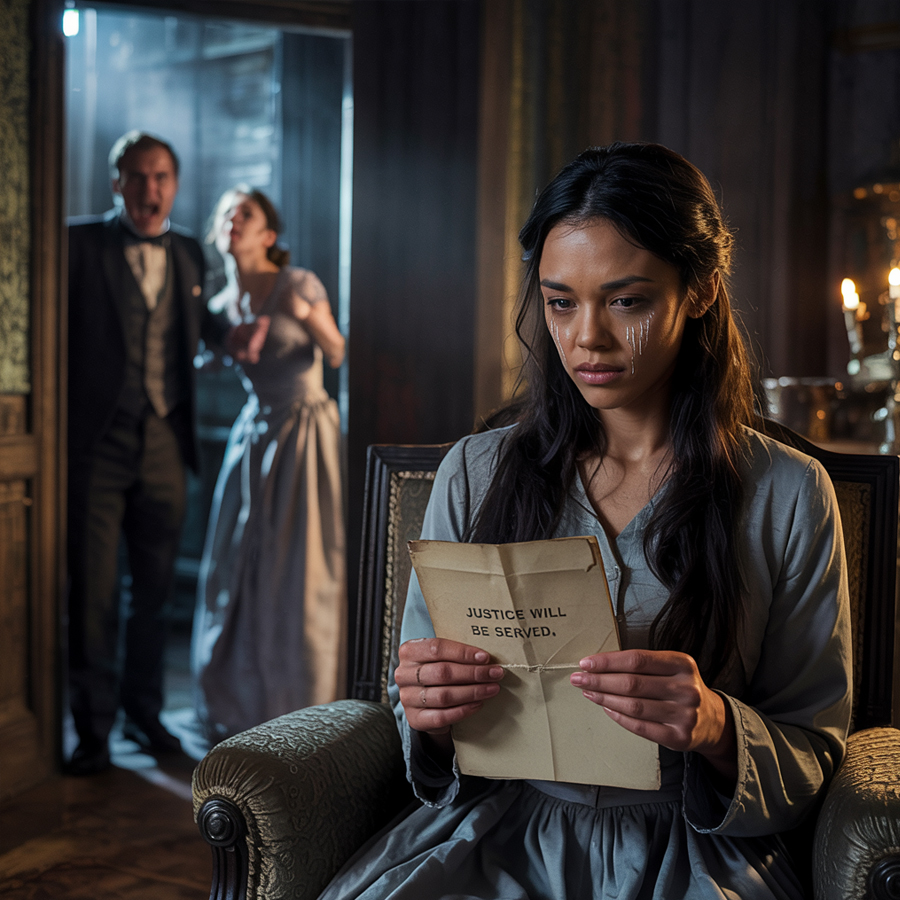
Maria returned home as if to her execution. In her tiny room, where the walls smelled of mold and the window looked out onto an empty yard, she sat for a long time holding the yellowed envelope. Her fingers trembled. She knew Aunt Anna was the only person who had seen in her not a burden, but a living, feeling soul. With effort, as if tearing not just the seal but her own flesh, she opened the envelope.
«My dear Masha,» the letter began, «If you are reading this, it means I am gone, and the world has once again treated you cruelly. Forgive me for not protecting you better. But know this: everything I had, I hid for you. Grigory and his serpent will get only what the eye can see. In the old oak tree by the river where we read books, there is a secret hiding place. Find it. There lies your freedom.»
Maria’s heart pounded like a bird trapped in a cage. Memories flooded back: the oak tree, huge like the forest’s sentinel; the hollow where they hid their favorite books from the rain; Aunt Anna’s voice reading to her at night. She could not believe it. This was not the end. It was a beginning.
The next morning, before dawn, Maria went to the river. The village still slept, and no one noticed her leaving. Grigory and Lidia, lost in their false triumph, paid no mind to the runaway. Maria, with a heart full of trembling hope, walked toward her future.
In the oak’s hollow, under moss and time, she found a box. Inside—documents for a small house in a neighboring province, a bank account in her name, a bundle of letters from Aunt Anna filled with love, guidance, and faith, and a medallion engraved with the words: «You are stronger than you think.»
Those words were like a lifeline thrown to her in the storm. She returned home, packed her few belongings, and left that very evening. Grigory and Lidia, drunk on their imagined victory, didn’t even notice her disappearance. And when they did—it was too late. The house they received was dilapidated, the lands were in debt, and the savings a mirage, spent long before Anna’s death.
Maria began a new life. In a small house by the sea, where each day began with the sound of waves and cries of seagulls, she found freedom. She read Aunt Anna’s letters, studied, worked, and breathed freely for the first time. Every evening, watching the sunset, she whispered, «Thank you, Aunt Anna.» Far away, Grigory and Lidia fought each other, cursing their empty inheritance.
The letter was not just a piece of paper. It was the key to the life Maria deserved. She took the name Anna in honor of her aunt and started fresh. Working at the local library became her calling. She sorted books, helped children learn to read, and in the evenings studied old textbooks found in the house. The medallion became her talisman, a reminder that she was not broken.
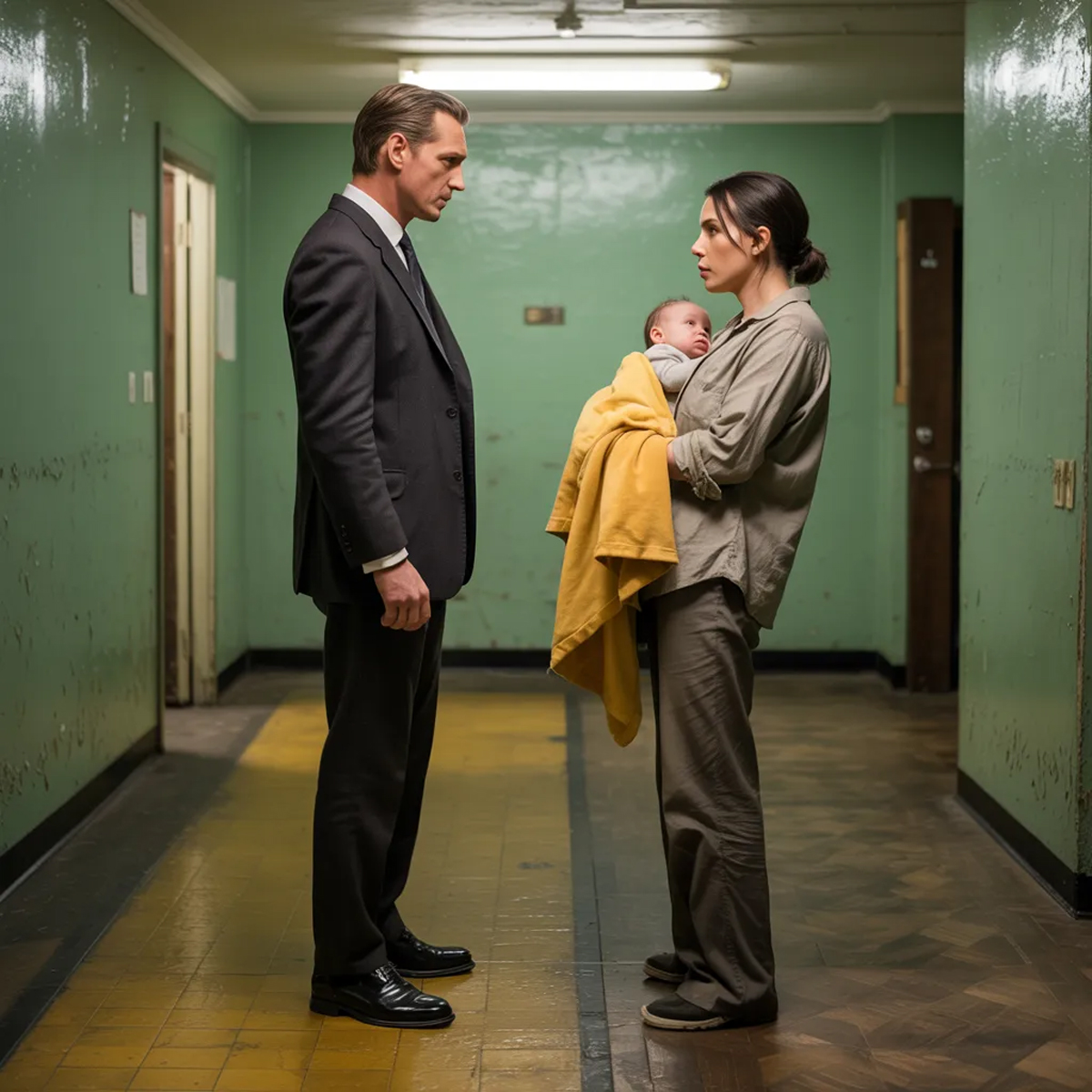
But the past didn’t let go so easily. Six months later, Grigory came to the town. His dandy suit was shabby, his eyes dull, and the arrogant smirk replaced by a hateful grimace. Lidia had left him when it became clear the «inheritance» was debts and a collapsing house. Learning from local gossip that Maria lived nearby, he showed up at her door, burning with rage.
«You!» he barked, pounding on the door. «You think you can steal what’s rightfully mine? Where is Anna’s money? I know she hid something!»
Maria, standing in the doorway, looked at him calmly. Years of humiliation had taught her to hold her head high.
«You got what you wanted, Grigory,» she said quietly. «Aunt knew who you were. Leave.»
He stepped closer, but there was no fear in her eyes. Something in her confidence stopped him. Or maybe it was the neighbor, a sturdy fisherman named Ivan, who happened to pass by and stopped at the noise. Grigory cursed and left, promising to return.
Maria was not afraid. She knew Grigory was an empty man consumed by his own greed. But just in case, she wrote to the notary asking to recheck the will’s legality. The reply came quickly: everything was perfectly in order. Aunt Anna had foreseen everything—even Grigory’s attempts to challenge her will.
Time passed. Maria settled in the town. She befriended Ivan, a kind and straightforward man. He taught her to fish, and she shared books with him. One day, while sorting the attic, Maria found another letter from Aunt, sewn into an old pillow. It read: «Masha, if life gets hard, remember—you are not alone. Seek those who see your soul. They are your true wealth.»
Those words became her beacon. Maria began helping others—orphans, the elderly, anyone in need of warmth. She organized free classes at the library for children from poor families. The town came alive, and people grew fond of «that quiet Anna who lives by the sea.»
Grigory never returned. Rumor had it he drank himself into oblivion trying to sell the mortgaged lands. Lidia, they said, left with some merchant but found no happiness. Maria, sitting by the window with a cup of tea, watched the sunset and smiled. Aunt’s letter had been more than an inheritance—it was a map to a meaningful life. And every day she proved she was stronger than anyone had thought