
Twenty Years Later: She Returned to the Room That Had Once Closed Her Out

The door closed with a sound she never forgot. Not the bang of anger, but the gentle, final click that told her everything was finished. For years, Clara would remember that sound whenever she heard footsteps echo down a hallway, or the hush of a voice lowering itself for something serious.
She remembered the way Santiago never raised his voice. He didn’t need to. When he said, “I need an heir,” it was as if he were making a business decision, not ending a marriage.
Twenty years can make a person forget a lot. But not that.
She learned to live with it, the label that followed her out of his house and into every room she entered for years: barren, incomplete, defective. No one in his family stopped her as she packed her things. No one asked how she was. The world kept moving, and she learned to move with it.
She found work, small jobs at first. She moved to neighborhoods where no one knew her story. She survived without expecting compassion. She learned to breathe through nights so silent she thought she might suffocate, and to count mornings when getting out of bed felt like a private triumph.
She went back to school, changed careers, found a quiet strength she hadn’t known she possessed. She filled her apartment with books and green plants, made it a place that felt like her own. She learned how to enjoy her own company. She learned to measure people not by what they showed, but by what they held together when no one was looking.
With time, the sharp pain of Santiago faded. It became a scar—present, but no longer bleeding.
So when the invitation arrived, tucked between bills and advertisements, she was surprised by her own reaction. There was no anger, no desire for revenge. Just a strange, almost curious calm.
The envelope was cream-colored, heavy, and expensive. The logo in the corner was unmistakable: Fundación Ríos. She held it for a moment before opening it, as if she already knew what it would say.
Santiago Ríos. Her ex-husband. The man who had once needed an heir more than he needed her.
It was an invitation to a gala. Charity dinner, donors, press, speeches. Santiago, now a celebrated businessman, philanthropist, husband, and father.
The kind of man whose life, on paper, made sense.
She left the invitation on the kitchen table and poured herself a cup of coffee. She looked around her apartment—small, tidy, nothing impressive, but everything earned. She wondered, for a moment, what it would be like to walk back into his world.
She thought about ignoring the invitation. About leaving the past where it was. But something inside her—a quiet, steady voice—told her she needed to go. Not to confront him. Not to prove anything. But to close something that had been left open for too long.
The night of the event, the hall was lit with understated elegance. Chandeliers, round tables, soft music. Clara walked in slowly, her heart steady but not racing. She wore a simple dress, clean lines, nothing flashy. She wasn’t there to be noticed, but her confidence was visible.
She stood just inside the doorway, holding the invitation with both hands, her knuckles white.
Across the room, Santiago stood near the stage, surrounded by people laughing and talking. At his side was a younger woman, immaculate, and behind them two teenagers, smiling, sure of themselves. The image was perfect, almost staged for a magazine.
For a moment, Clara felt the weight of the past try to return. She breathed deeply and kept walking.
Santiago saw her. His smile froze. For a second, he seemed not to know how to react.
Clara met his gaze. Not defiant, not submissive. Just present.
Murmurs began to ripple around the room. Some people recognized her. Others sensed the tension without understanding it.
Santiago approached, his steps uncertain.
“Clara, I didn’t expect to see you here,” he said, forcing a cordial tone that didn’t quite fit.
“I didn’t expect to come,” she replied softly. “But sometimes life brings us back to places we thought we’d left behind.”
There was an awkward silence. They didn’t talk about the past. They didn’t need to. It hung between them, unspoken.
Santiago nodded, unsure what else to say, and excused himself to greet other guests.
Clara moved further into the hall, aware that her presence had shifted the atmosphere. No one knew why she had returned. No one imagined she had come back not empty or broken, not to reclaim what she’d lost, but with something that would quietly change how everyone understood that old story—starting with herself.
The dinner moved on. Plates were presented with care, conversations kept to polite topics. Clara sat at a table near the center, surrounded by important names, expensive suits, calculated smiles.
No one seemed to remember she’d once belonged to this world, twenty years ago, when she thought belonging to someone was the same as belonging to herself.
She watched Santiago move through the crowd, shaking hands, laughing in the right places, resting a protective hand on his wife’s shoulder. Every gesture seemed rehearsed.
Clara didn’t feel jealousy. What she felt was clarity—a gentle understanding that the man across the room hadn’t been part of her life for a long time, even if the memory had taken years to catch up.
The event organizer took the stage and thanked the guests, highlighting the foundation’s impact. She spoke of numbers, community projects, families helped. When she mentioned the key donors, Clara noticed Santiago’s brow furrow at names he didn’t recognize.
For years, the foundation had received steady support from someone who always requested anonymity. Most didn’t care, except the organizer, who knew those quiet donations had kept many programs alive.
Clara remembered the first time she decided to give. It wasn’t grand. It was a private choice. In those first years after the divorce, when pain was still close, helping others gave her a reason to get up each morning. She gave what she could—sometimes little, sometimes more—but always with the conviction that her life was not empty.
Each donation, each collaboration, was a way to affirm she still had something valuable to offer.
The room quieted when the organizer announced a special guest. Clara looked up, surprised. She hadn’t expected any attention. But as her name was called, she felt a wave of eyes turn toward her.
She hesitated for a second, then stood and walked to the stage with steady steps, aware of the curious, confused, and surprised looks. Santiago watched her openly, not hiding his discomfort. He didn’t understand why Clara was there, under the lights, with a microphone in hand.
She took a breath. She hadn’t prepared a speech. She didn’t need one. She thanked the foundation, spoke simply, and then, with a quiet honesty that held the room, said that for many years she’d believed her worth as a woman depended on something she couldn’t give.
She didn’t mention names or blame. The message was clear.
She explained that pain had forced her to rethink what it meant to leave a mark on the world. As she spoke, some guests looked down. Others listened with genuine attention.
Santiago stood frozen, his face a mix of surprise and discomfort. Clara spoke not from resentment, but from a truth won over years.
She paused, smiled gently, and said she was grateful for second chances—even when they came in unexpected ways.
She announced she wanted to share the credit for her support with two very important people.
She turned slightly and looked toward the back of the hall. Two young adults stood up almost at the same time—a tall young man with calm eyes and a young woman with a sweet but firm expression. They walked to the stage, emotion visible in their faces.
When they reached her, Clara’s smile transformed her face.
“These are Mateo and Lucia,” she said, her voice steady.
A murmur went through the crowd. No one quite understood.
Clara explained that she’d met them years ago, both teenagers in foster care. Too old to be adopted easily, too hurt to trust quickly. They weren’t babies, not a simple promise.
She talked about her fears—fear of not knowing how to be a mother, fear of failing again, fear of loving and losing. But also about how those fears became lessons: arguments over chores, late-night study sessions, unexpected laughter, shared silences.
She didn’t need details. The way she looked at Mateo and Lucia said more than any words.
The revelation landed softly but deeply.
Santiago felt a knot in his stomach. It challenged everything he’d believed for years. Clara hadn’t just rebuilt her life—she’d filled it with meaning he’d never considered valid. The motherhood he’d reduced to blood and name was there: living, real, in front of everyone.
Mateo and Lucia spoke briefly, each in their own way, about how Clara had taught them they were not mistakes or burdens. They spoke about opportunity, dignity, and hope. Their words weren’t grand, but they were true.
When they finished, there was a moment of absolute silence, as if everyone needed to process what they’d witnessed. Then the hall erupted in applause—long, sincere, different from the polite clapping at most events.
Santiago clapped, too, but felt something inside him break. For the first time, he understood he’d confused legacy with love, success with fulfillment.
Clara left the stage with her children, not seeking approval. She’d said what she needed to say, and the real twist wasn’t in the words—it was in the life she’d built, quietly, out of sight.
The atmosphere in the hall never quite returned to normal. The music resumed, waiters served coffee and dessert, but something had shifted in the center of the night.
Clara returned to her table with Mateo and Lucia, finally able to relax. They laughed quietly, talked about small things, like any family sharing an easy intimacy. There was no drama, just a peace earned over years.
Santiago watched them from a distance. The image pressed on him. The two young adults didn’t look like Clara, but they had her calm gestures, her attentive listening, her quiet confidence. He realized, perhaps too late, that this was inheritance—not genetic, but human.
He found the courage to approach. He didn’t know what he would say, only that he needed to say something. When he reached the table, Clara looked up, unsurprised, as if she’d expected this.
Mateo and Lucia waited respectfully.
“I wanted to congratulate you,” Santiago said finally, his voice lower than usual. “I didn’t know any of this.”
Clara nodded slowly.
“Did you ever ask?” she replied, not harshly, just stating a fact.
They walked a few steps to a quiet corner. Santiago seemed uncomfortable, out of his usual role. He admitted that for years he’d thought he was doing the right thing, following the path everyone expected. He spoke of responsibility, name, continuity, but his words lost force as he spoke, as if he was noticing their emptiness.
“I’m not saying I was unhappy,” he added, “but I wasn’t fulfilled.”
He looked down.
“I think I confused a lot of things.”
Clara listened, not needing to defend or justify herself. When she spoke, it was with the peace that comes from acceptance.
“I was confused, too,” she said. “I thought my life was over because I didn’t fit someone’s expectation. It took years to realize I wasn’t the one who was incomplete—it was the idea others had of me.”
Santiago breathed deeply. For the first time, he felt the real weight of the decision he’d made twenty years ago. It wasn’t guilt, but a new, uncomfortable clarity.
He looked at Mateo and Lucia, talking quietly a few feet away.
“They’re amazing,” he said. “It’s clear what you mean to them.”
Clara smiled.
“They’ve taught me as much as I’ve taught them. That’s what makes a family real.”
There were no dramatic apologies, no attempts at reconciliation. Both knew that time had passed. What existed between them now was something else—a clean, honest closure.
Santiago nodded, a mix of respect and nostalgia.
“I’m glad to see you like this,” he said, sincerely.
When they returned to the table, Mateo and Lucia stood. Santiago shook their hands, looking them in the eyes. There was no condescension, only genuine recognition. They responded politely, with nothing to prove.
Soon after, Clara decided to leave. The event had served its purpose, at least for her. As she said goodbye to a few acquaintances, she felt a lightness she hadn’t known in years. As if returning to that place had finally let her leave behind the version of herself that had once walked out, broken.
Outside, the night air wrapped around her gently. Mateo joked about her speech. Lucia talked about a new project she wanted to start. Clara listened, smiling, knowing that this was her real victory—not returning to be seen, but to confirm herself.
From inside, Santiago watched them go. For the first time, he didn’t feel pride in what he’d built, but a silent question about what he’d missed. He understood that the real twist wasn’t that Clara had become a mother, but that she’d found a fulfillment that didn’t depend on him, or a name, or an heir.
Twenty years after being left behind, Clara hadn’t returned to settle scores. She’d come to close a chapter and show, without grand words, that the true fertility of a life is measured by the capacity to love, to hold others up, and to keep going with dignity.
News

Aquella tarde parecía igual a cualquier otra, de esas que pasan sin dejar huella, mimetizadas en la rutina de un matrimonio que se presume sólido. El sol de Ciudad de México entraba por la ventana de la recámara con esa luz tibia de las cinco de la tarde, una claridad dorada que siempre me había gustado porque hacía que el polvo flotara como si fueran pequeños recuerdos suspendidos en el aire. Yo estaba doblando ropa recién salida de la secadora, sintiendo el calor de las sábanas en las palmas de mis manos, cuando escuché a Julián decir que iba a meterse a bañar. Su voz sonaba normal. Demasiado normal.
Aquella tarde parecía igual a cualquier otra, de esas que pasan sin dejar huella, mimetizadas en la rutina de un…
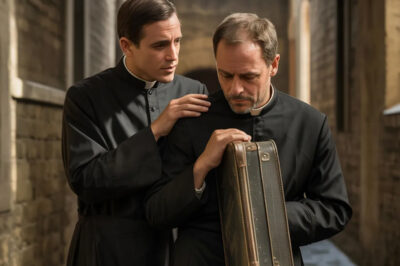
Pietro Palazzini tenía las manos sumergidas en el agua jabonosa de la cocina del Vaticano cuando los gritos perforaron la calma de la mañana. No eran gritos ordinarios; tenían la frecuencia del terror absoluto, ese que solo surge cuando el mundo conocido se quiebra de golpe. Era el 16 de octubre de 1943. Roma llevaba apenas cinco semanas bajo la ocupación nazi, pero el aire ya se sentía como una soga que se apretaba lentamente.
Pietro Palazzini tenía las manos sumergidas en el agua jabonosa de la cocina del Vaticano cuando los gritos perforaron la…

El aire acondicionado del aeropuerto internacional de la Ciudad de México zumbaba con una indiferencia metálica, ajeno a la tensión que se cocinaba cerca de la puerta de embarque. Lucía, una mujer pequeña de manos nudosas y espalda ligeramente encorvada por décadas de revisar tareas bajo la luz de bombillas de bajo voltaje, apretaba su bolso contra el pecho. A su lado, flanqueándola como dos columnas de mármol, estaban Mateo y Julián.
El aire acondicionado del aeropuerto internacional de la Ciudad de México zumbaba con una indiferencia metálica, ajeno a la tensión…
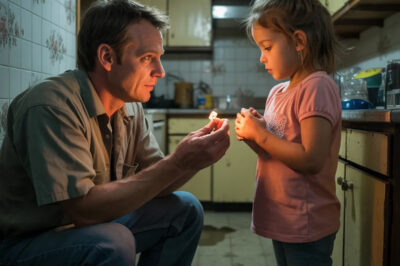
Daniel tiene treinta años, pero sus manos, marcadas por el rastro del trabajo manual y la resequedad del invierno, cuentan una historia de más décadas. Es padre soltero, una etiqueta que en la práctica significa ser el último en dormir, el primero en despertar y el único en sostener un mundo que amenaza con desmoronarse cada quincena. Cría a tres hijos en una casa donde el silencio es un lujo y el espacio una negociación constante.
Daniel tiene treinta años, pero sus manos, marcadas por el rastro del trabajo manual y la resequedad del invierno, cuentan…

Diego se quedó inmóvil dentro de la camioneta, con el motor apagado y las manos todavía aferradas al volante. Sobre el asiento del copiloto descansaba una caja de cartón mal sellada y, justo encima, un sobre manila cuyo color se había rendido ante el paso de los años. Afuera, la noche de Monterrey era una presencia física: tibia, cargada de ese viento seco que baja del Cerro de la Silla y que nunca termina de refrescar las calles. El estacionamiento del edificio, una estructura de concreto con luces amarillentas y parpadeantes, estaba casi vacío.
Diego se quedó inmóvil dentro de la camioneta, con el motor apagado y las manos todavía aferradas al volante. Sobre…
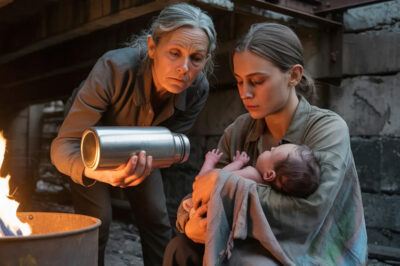
El aire bajo el puente de la calle Cuarta olía a humedad estancada y a humo de leña, un aroma que Ava nunca habría asociado con la supervivencia hasta que el mundo que conocía se desmoronó. Marlene no le pidió explicaciones el primer día, ni el segundo. Simplemente le pasó un termo abollado con caldo caliente, observando en silencio cómo Ava alimentaba a su hijo recién nacido, Leo, cuyo llanto quedaba amortiguado por el rugido constante de los autos que pasaban por encima de sus cabezas. La bondad de Marlene no era de esas que se anuncian con trompetas; era una caridad práctica, de manos callosas y gestos breves.
El aire bajo el puente de la calle Cuarta olía a humedad estancada y a humo de leña, un aroma…
End of content
No more pages to load